
Easy access
Journalism
Themes
Formats
Programs
News
Support Gerador in building a more creative, critical and participatory society. Find out how here.
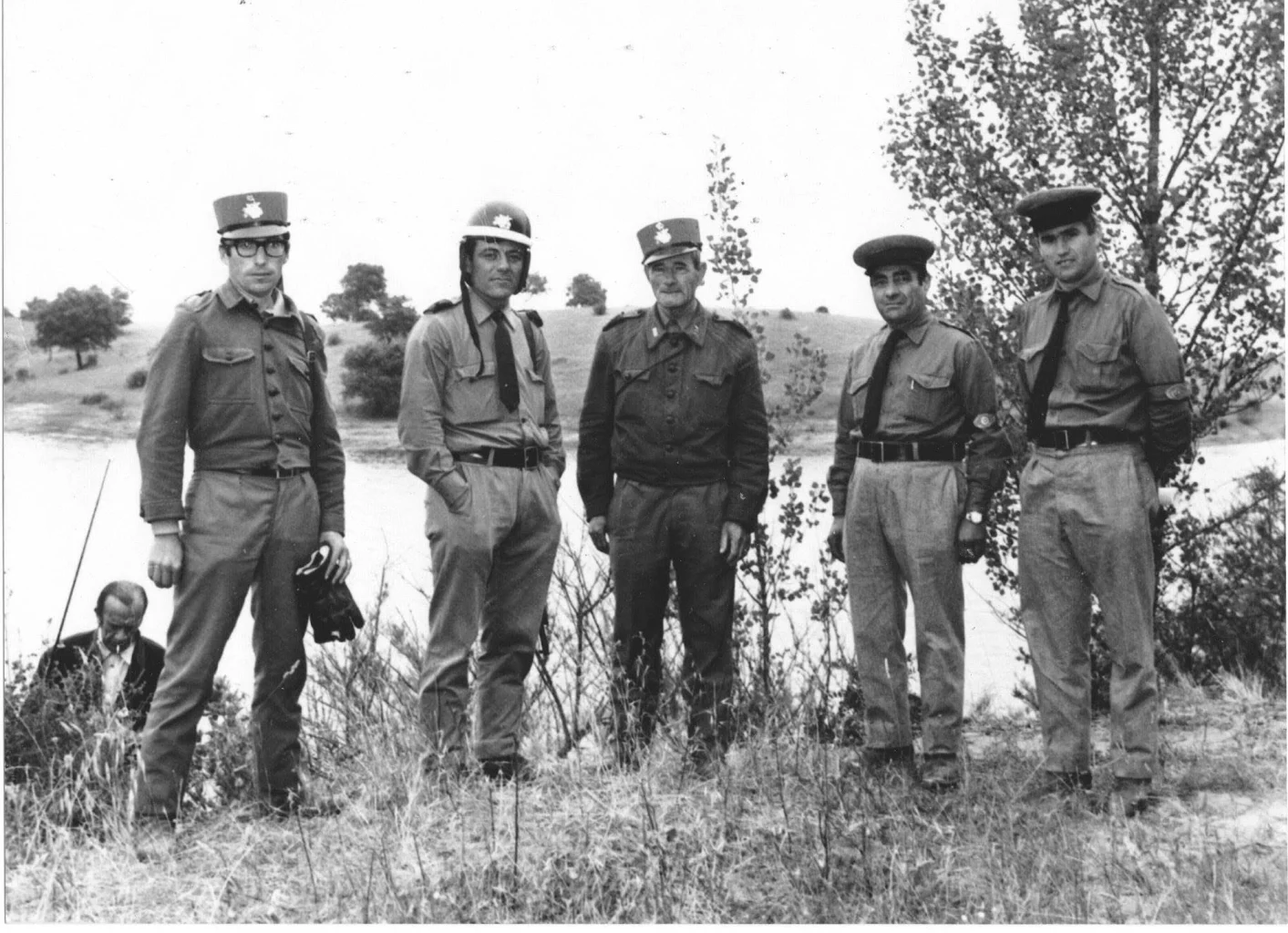
Reporting and text by Inês Loureiro Pinto
Image report of Victor Martinho
Editing by
Tiago Sigorelho
Design by Frederico Pompeu
Opening photograph provided by Luis Pinto
17.11.2025
"
"
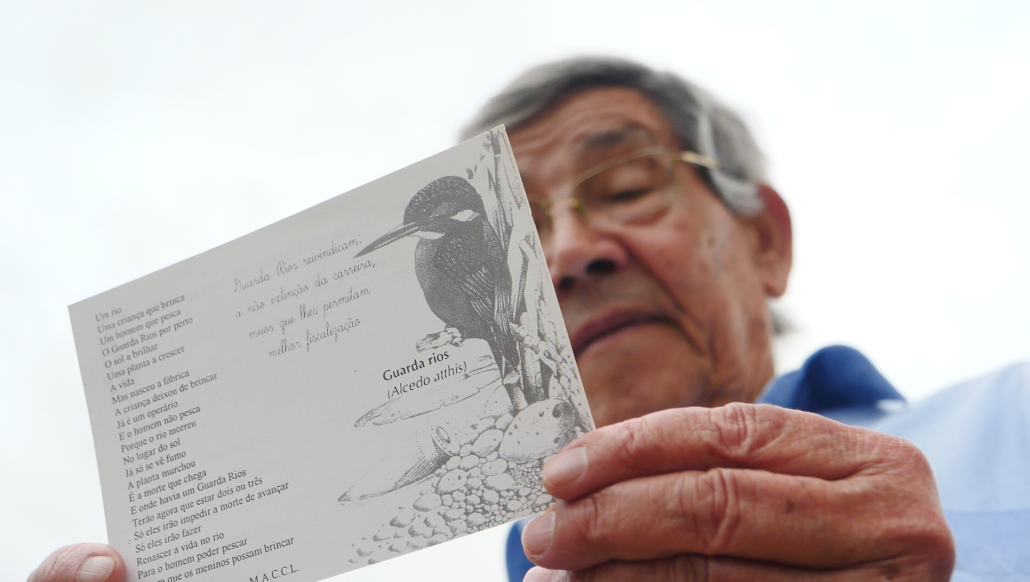
The poem is signed with the initials “MACCL”. Luís Alves doesn't remember who wrote it. It was printed on the left margin of the postcard, accompanied, on the right, by an illustration of a kingfisher, the small bird often found in the waterways of Europe and North Africa, its scientific name, and the appeal: “Kingfishermen demand: the non-extinction of their career, resources that allow them better surveillance”. It was sent by the National Federation of Public Service Unions to the President of the Republic, then Mário Soares, explains the former kingfisherman during our meeting, in the town aptly named Rossio ao Sul do Tejo (South Tagus Square).
Luís Alves was elected by his colleagues to belong to the Federation's working group which, together with the Government, through the State Secretariats for the Environment, Budget, Public Administration and Administrative Modernization, negotiated in 1995 the draft decree unifying the careers of nature guards and wardens, as well as the structure of the new career. He is now 79 years old, he was nearly fifty when his profession ceased to exist. He retired shortly after the turn of the century, already as a nature warden. But the older residents of Abrantes still recognize him as the "Mr. River Guard".
Accompanied by the three remaining copies of the postcard, well preserved among documents yellowed by time, is his lengthy resume, with detailed descriptions of the duties he performed over more than two decades as a river ranger. There is also space for a reflection on his career, written by himself. “Feeling that by performing our duties we are contributing, even modestly, to improving the situation and defending the vital elements for our survival and the survival of other species (the air, the water, the soil, the fauna and the flora) brings us a satisfaction and personal fulfillment that we would hardly find in performing a different function or in another institution.”
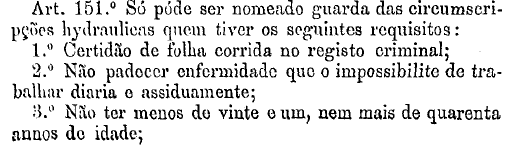
The career of river ranger emerged with a royal decree from King Carlos I, who, on December 19, 1892, approved the Regulations for Hydraulic Services, an entity within the Ministry of Public Works. Among other provisions, the regulations defined the structure of the Services, composed of engineers, conductors, and draftsmen (similar to professionals in public works and mining), and other new roles, such as ditch masters and river rangers. The latter were hired through a competitive process with a number of requirements: being between 21 and 40 years of age, being able to read and write, having no criminal record nor "suffering from an illness that prevents them from working daily and assiduously," having previously worked in agricultural or hydraulic service works, and not having a sales establishment in the area to which the canton entrusted to them belonged. Preference was given to those who had a military career. As supervisory agents, the masters and wardens swore an oath before a judge.
Depending on the conditions of the territory, superiors decided whether the guards would do their work on foot or on horseback. In the latter case, the regulations stated that the guard would receive an additional 200 réis per day for "horse upkeep"—without accounting for inflation, this amount would correspond to one-tenth of a cent today. Typically, a canton was defined by the sum of the distances a guard could cover on foot upstream and downstream from their starting point in a single day. Their duties were diverse and evolved according to the progressive human activities dependent on waterways, such as harnessing water for mills, extracting sand, building weirs, or drawing water from boreholes.
The 1994 National Classification of Professions describes the extensive list of responsibilities of these professionals, including overseeing compliance with laws and regulations of the hydraulic service, monitoring works in the riverbed and along the banks of public waterways and also on the coastline, and issuing fines and citations. River guards also collaborated in the preparation of registers, guided conservation services, and filled out periodic maps. Additionally, they could be called upon to police forests and assess timber and land, as well as assist in matters of public safety and in the work of colleagues – for example, serving as a witness in a citation.
Walking along the riverbanks was a predominantly solitary job, except for interactions with the community, conflict resolution, or guiding the work of the ditch masters and road workers. After completing the introductory stage of the profession, meetings with superiors, the chief engineers of sections who supervised a group of sections in a given region, were occasional. In 1941, the then General Directorate of Hydraulic and Electrical Services employed 192 first-class river guards and 383 second-class guards (the initial phase of the career), in the four regional directorates corresponding to the hydrographic basins of the Douro, Mondego, Tagus, and Guadiana rivers. The vast majority earned a salary of eight escudos, which would be four cents today. The operational staff consisted only of men – the positions for women in the Hydraulic Services were administrative.
According to Francisco da Silva Costa, geographer and professor at the University of Minho, whose doctoral thesis was dedicated to the analysis of public water management in the 1892th century, "river rangers undoubtedly assume a central role in the management of areas belonging to the Public Water Domain," highlighting the nature of their mission in the XNUMX regulation, "essentially protective, requiring them to employ all means of surveillance and warning to prevent crimes, offenses or transgressions, and they must use the utmost prudence and circumspection in the performance of their duties, in order to avoid conflicts."


Francisco da Silva Costa focused his research on water resource management in Portugal during the 20th century, starting with the publication of his doctoral thesis. Titled “The Management of Public Waters – The Case of the Ave River Basin in the Period 1902-1973,” it was essentially based on the analysis of the archives of the Northern Hydrographic Region Administration of the Portuguese Environment Agency, the entity that replaced the Hydraulic Services. The geographer spent approximately three years sifting through more than 30,000 documents related to the Ave River basin – documentation related to licensing, legal procedures, and correspondence – a process hampered by the poor state of preservation of the documents.
Fascinated by the size of the archive, Francisco led the efforts to have it moved from Porto to a room at the University of Minho in Braga, with better conservation conditions. For about a decade, as part of a project funded by the Calouste Gulbenkian Foundation, the archive has been located in Guimarães, under the care of the Martins Sarmento Society. In 2024, the APA (Portuguese Environment Agency) announced the construction of the Museum and Historical Archive of Water Resources in Albergaria-a-Velha, in the former Valmaior Paper Mill, an investment exceeding seven million euros. The documentary collection from the various hydrographic regions of the country will also be housed there.

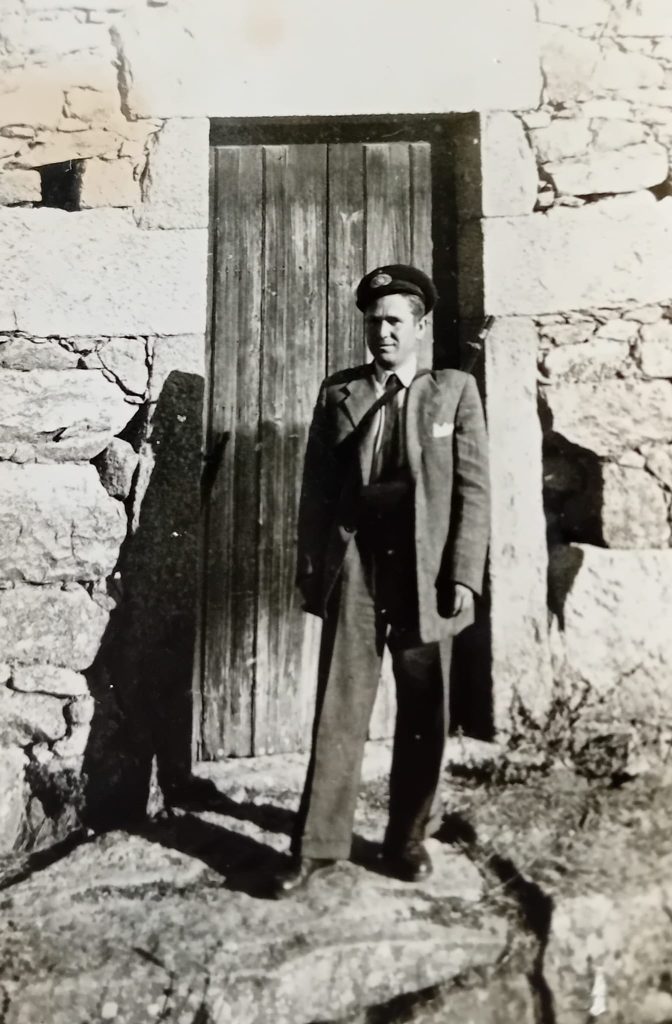
Luís Pinto was born on Christmas Day 1934. Next year he turns 91 (a fact difficult to grasp, judging by his youthful physical and mental vigor). In the backyard of his house, on a quiet street in Torrão, a village in the municipality of Alcácer do Sal, he meticulously retraces his career, navigating objects from his old routine, carefully recovered from his personal archive. The grey cotton cap with the insignia of the Hydraulic Services and the national coat of arms, an essential piece of the river guard's uniform, remains intact, as if it had been made in this century. Already bearing the natural marks of age is the green tin box he used to carry over his shoulder containing the necessary forms and correspondence, as well as the regulations and the appointment certificate, documents that river guards were required to always have with them. He became a river guard at 27, having previously mastered the shoemaking trade passed down by his father. Even today he keeps his machines oiled in the garage to do small jobs for the neighborhood. Also in the garage, we found the leather boots he wore while traveling kilometers on duty in Torrão. They still fit him.
He recalls that there were 102 candidates in that competition and, with pride on his face, that he was among the top twelve in the entrance exam. He went to Meimoa, in the municipality of Penamacor, and was later transferred to the village of Vermelha, in Cadaval. "But as it was far away and the salaries were low," he explains, he took advantage of a downtime in his hometown to return to his Xarrama, which meets the Sado River further downstream. More than six decades later (two since his retirement), in May of this year, sporting his impeccable cap, Luís Pinto led a walk along the Xarrama River as part of the international Walking Rivers initiative, promoted by the newly created Xarrama Vivo Movement, whose objective is to activate the local community around the regeneration of that waterway.
At the end of September, he was the protagonist of the exhibition “The Xarrama River and the Last Kingfisher”, at the Torrão Ethnographic Museum, organized by the Alcácer do Sal City Council. His documents, accompanied by images from his brother Joaquim's personal archive, help to tell the story of the town, which is a story revolving around the river, points out Maria João Santos, the municipality's archaeologist who conceived the exhibition. She was interested in recovering the history of the town's nerve center, which in memory is not so distant from our days, despite being long. “Since prehistory, rivers have been essential routes, not only for transport, but also for life. Water is life, and the Xarrama and its tributaries are no exception,” notes the archaeologist. “And just 50 years ago, people here would accompany their mothers to the riverbank to bring laundry, and the fathers would fish and the young men would learn to swim in the river's pools. So the exhibition brings together two important aspects, which is the recovery of that connection with the river and also the importance of its current preservation.” Maria João admits that “today I wouldn't swim in the river.” “But I want my children to be able to learn to swim there someday.”
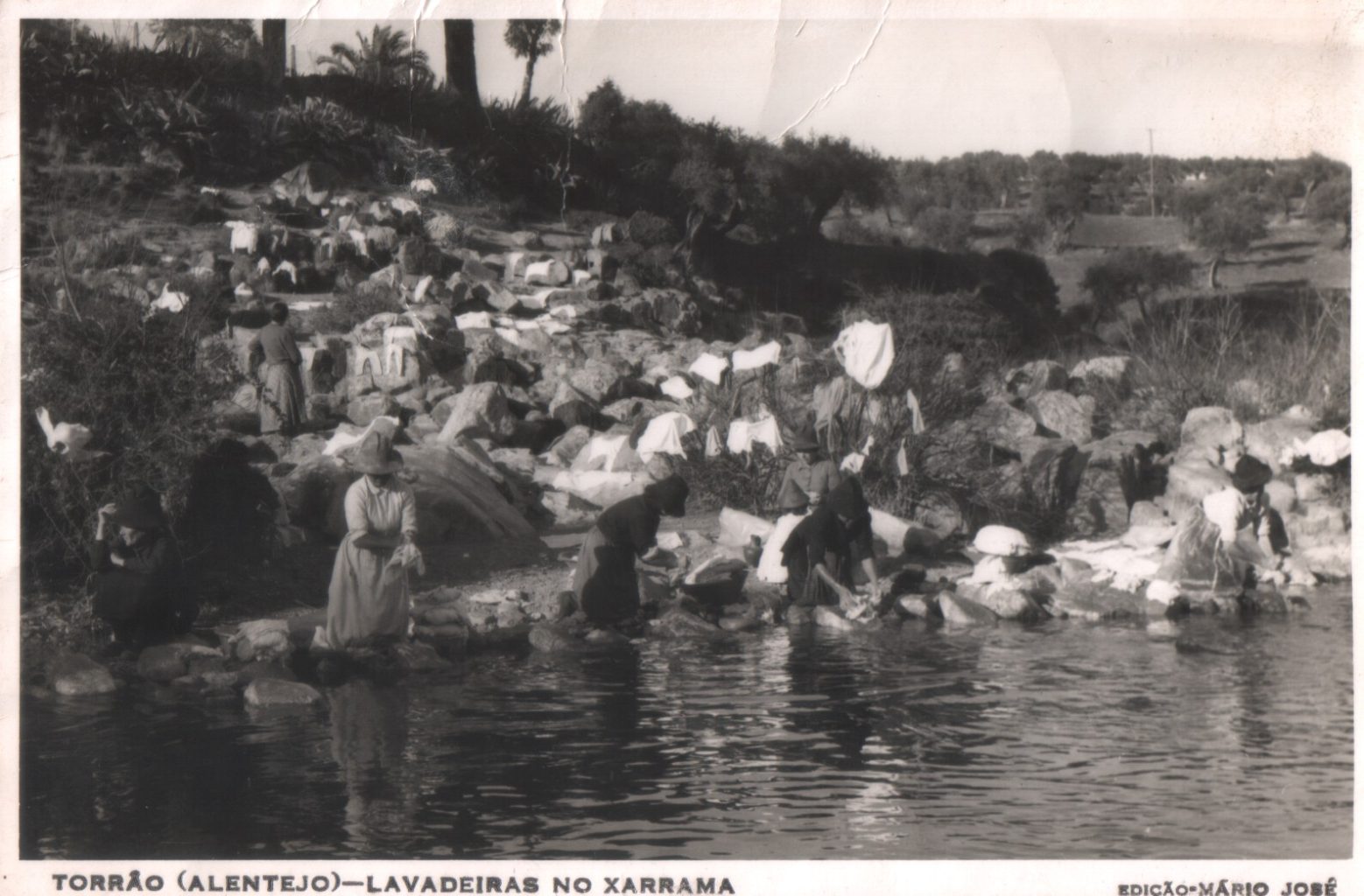
The Xarrama River stands out in the Alentejo landscape like blue over gold. Under the guidance of the former river ranger, we traveled some of the usual paths, although the view of the river was challenged by brambles, reeds, and water hyacinths. And locked gates. At one point of access to the riverbank, adjacent to an estate, passage was impossible due to a large iron gate locked with a padlock. “If there were river rangers today, they would already have difficulty monitoring,” laments Luís Pinto. “I followed the river everywhere. It’s a public path, it’s meant to be open.” In 1864, a decree by King Luís I made navigable and floatable rivers and their banks, as well as the waters of the sea, their beds and banks, seaports, beaches, canals and ditches, artificial ports and existing or future docks, public. According to the current law establishing the ownership of water resources, "all private parcels of beds and banks of public waters are subject to easements established by law and, in particular, to a public easement, in the general interest of access to the waters and passage along the waters, fishing, navigation and floating, when dealing with navigable or floatable waters, and the monitoring and policing of the waters by the competent authorities". In navigable or floatable waters, the easement is 30 meters. In non-navigable or non-floatable waters, such as streams and creeks, it is ten meters from the riverbank.
Maria João Santos confirms this difficulty, recalling a marked trail that she couldn't complete because it was blocked off near the river. She recounts that, during the community walk in May of this year, it was necessary to ask the parish council in advance to notify the owners of the land adjacent to the river to clear the passage through the easement. Gerador He noted that this is a reality that is also occurring in other parts of the country.


José Francisco da Cruz traces, with his finger, the blue lines of the military map of his hometown, Ourique – just a few kilometers from the source of the Sado River. “Before, I used to run up and down each stream on foot. It was different from driving in a jeep, on the asphalt. I knew the people.” They called him Master Zé Guarda-Rios (Master Zé the River Guard). His intimacy with the community was such that, in the absence of an official office for public service, his front door was always open. “It was common for citizens to knock on our door to discuss matters related to their professional activity, interrupting my Saturday morning cartoon marathons, or the time when we were all sitting waiting for 'Roque Santeiro',” recounts Nuno Guilherme Cruz, José Francisco's son. “I always saw him as a facilitator, constantly available to help anyone at any time, often interrupting family moments.”
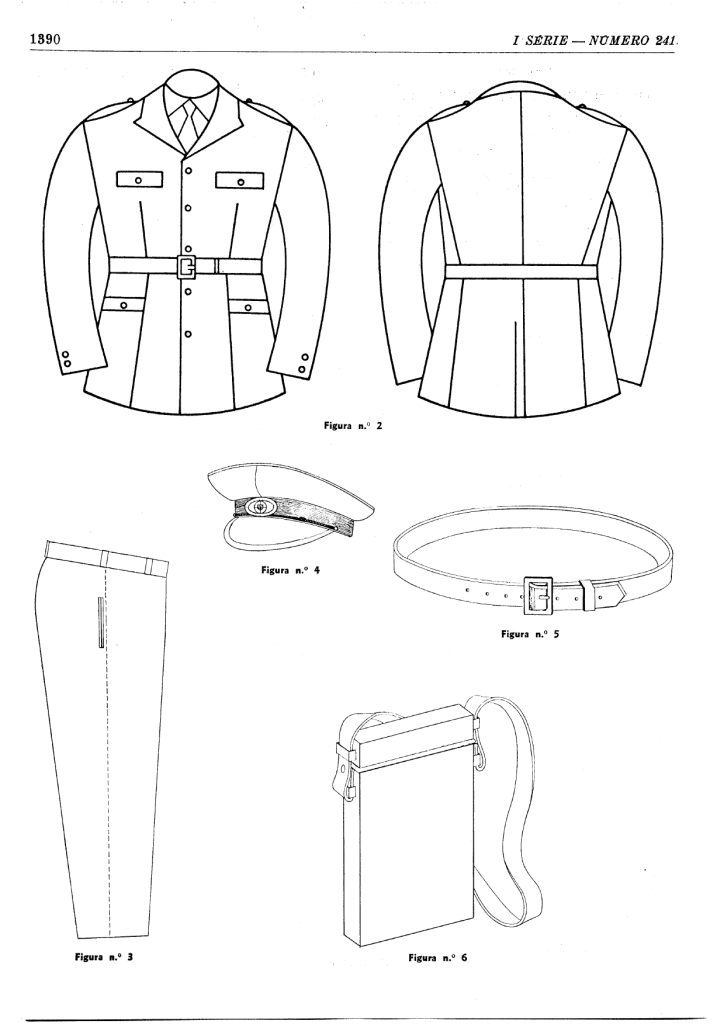
After serving overseas and working in Germany, José Francisco Cruz became a river guard in 1976. From that time, he still has his military licenses and the badge he wore on his armband. He never received a uniform, despite a 1969 decree-law granting this right to river guards – as well as state support covering half the cost of the uniform. He recalls being asked for his measurements twice, but the uniform never arrived. This didn't bother him; "I preferred to go around in civilian clothes." Everything he used for work, from his military licenses to his typewriter, was paid for out of his own pocket. "Personal dedication compensated for many of the institutional limitations because the profession merged with his identity," reflects Nuno Guilherme Cruz.
“He was the poor relation of the State,” says Mestre Zé, comparing the profession to that of the road workers, the professionals in charge of cleaning the roads who occasionally assisted the river rangers in operational work. The houses where they were stationed, next to the roads, are still part of the horizon of the national roads. “What we had that was good was being free,” reflects José Francisco, in the living room that was also the reception area. The river rangers managed their schedule and route according to their obligations and the weather. When he was still a second-class river ranger, in the 30s, Luís Pinto earned 729 escudos per month. He adds that it was gradually increased to a “decent salary.” At the end of his career, when he had already replaced walking or cycling with his personal car, he began to receive a gasoline subsidy.
“Doing what I loved was half the salary,” notes Luís Alves. He assures that his was the first computer for the employees of the Hydraulic Services, a Philips, where he recorded procedures and property registrations. He began his career as a river ranger in the 80s, after returning from Switzerland. He doesn't recall there being many more competitions after his. “In the end, there were five river rangers for twelve municipalities north of the Tagus River.”
In the last quarter of the XNUMXth century, professionals in the Hydraulic Services began to retire and were not replaced, leaving their positions to colleagues from neighboring areas. The close-knit role, the river ranger's greatest asset, was fading away.
A mediating voice in conflicts between landowners and an advisor in the prevention of transgressions, the final word was hers. At times, it was necessary to confront verbal and physical threats from those harassed by the inspectors. "I believe I managed to be a tool for the people I worked with," reflects Luís Alves. He speaks of the importance of resolving conflicts on-site and with the direct participation of the people involved. "I knew [the territory], but I only passed through. The people were raised there, they knew how the river behaved. They may not have been highly knowledgeable people, with degrees, but they were people of expertise."
During our meeting at Rossio ao Sul do Tejo, with the great river that originates in Spain as a backdrop, the former river ranger repeats an aquatic analogy. He considers himself a fish swimming against the current, an attitude that may have influenced his trade unionist leanings and, later, his foray into local politics – he was president of the Union of Parishes of São Miguel do Rio Torto and Rossio ao Sul do Tejo, in the municipality of Abrantes, until 2021 – but also his decision to retire from the Hydraulic Services earlier than he had anticipated.
“The old philosophy was that a good river ranger was one who didn't issue fines, because he watched over his area and didn't allow infractions to occur. At a certain point, the philosophy began that this had to generate money,” explains Luís Alves. He rebelled against his superiors for disagreeing with the fines imposed. “For example, a villager earning 200 escudos a month (just under one euro) was fined 20 contos (almost one hundred euros) for an infraction,” while they turned a blind eye to influential offenders. What he calls a “lack of professionalism and balance” fueled his dissatisfaction with the job and led to Luís Alves's early retirement. But he didn't leave without first leading the representation of his colleagues in career negotiations with the Government. The Iberian Brotherhood of the Tagus is preparing to launch a book about its history.
“And who was the main offender? The State itself. That is, the mayor of the local council requested permission to build a school near the watercourse. It was a public benefit. Then came the Wastewater Treatment Plants. Which wastewater treatment plants are not functioning? A large part of them are state-owned. But is the State going to fine itself? There is an institutional conflict here,” says Pedro Teiga, son of a river ranger, with a doctorate in environmental engineering and a specialist in river rehabilitation.
Other factors contributed to the weakness in the maintenance of waterways, according to Francisco da Silva Costa: “Portuguese legislation, which is very scarce regarding the control of water pollution, was fundamentally based on the general principle that it is forbidden to pollute. This simplistic principle proved ineffective, leading the bodies responsible for its application to an irremediable acceptance of situations that were difficult to resolve. The entities responsible for water management were confronted with accomplished pollution situations, lacking adequate means of intervention, both to recover the quality of degraded water resources and to deter polluting sources.”

In 1992, RTP (Portuguese public television) reported that there were 317 professionals nationwide for more than 800 cantons, with an average salary of 80 to 90 escudos (adjusted for 2024 values, this would be around 900 euros). The problem of a lack of professionals led the General Directorate of Hydraulic Services to plan changes such as defining the requirement of a ninth-grade education, vocational training, and a reduction in the national workforce to 215 river guards, who would operate not by canton but by brigades. In the same year, the professionals met to develop a counter-proposal: they wanted a review of their income and the enhancement of their career, which had remained untouched for a hundred years.
The process culminated in 1995 with the unification of the river guard and nature warden careers – which had already existed since 1975 as a specialized body for environmental preservation and nature conservation – and, in 1999, the unification of the warden and nature guard careers took place, with the functions of "surveillance, inspection and monitoring related to the environment and natural resources, namely in the context of the water domain, natural heritage and nature conservation," according to the decree that defines it, including the power to issue fines and carry weapons. Luís Alves and José Francisco Cruz have already retired as nature wardens. This decree has been in force for 26 years and, currently, professionals are requesting an urgent review of the career, particularly regarding the reinforcement of technicians in the field.
Luís Pinto shows us a letter he received in 2002, the year he retired. He was informed that his services as an observer at the Hydrometric Station were no longer needed, as the equipment had been digitized. Unlike the flexibility of his role as a river ranger, as an observer he had to perform the measurements like clockwork. The measurements were weekly, always at the same time. He never missed a Saturday. In the same communication, signed by the regional director, the 90-year-old river ranger insists we read the last paragraph: “Recognizing the dedication always demonstrated by Your Excellency throughout the period in which you collaborated in this important activity of collecting information relating to the water resources of our country, this letter also serves to express our due official recognition for this collaboration.”

The event accurately represents the technological transition that the turn of the century brought to the world and highlights the Achilles' heel of the most important employees of the Hydraulic Services: the meager investment in training. Their technical and scientific knowledge was purely empirical, gained through the sweat of exhaustion on the banks of the canton. There is a knowledge gap between the chief engineers of the section, who rarely go into the field, and the river guards, the operational arms, many of whom left school after the fourth grade.
Luís Pinto fondly remembers his superior, the "engineer," emphasizing that one of the greatest joys of his professional journey was being able to interact with "competent people, from a different culture, who taught us a great deal." For Luís Alves, the apparent handicapIt was an opportunity for collaboration: "The river ranger always had the goal of joining forces with people who knew more than he did. We don't need to be the best; we need to be at that hinge that makes things move forward."
The profession takes its name from the bird that is easily found in the riverside areas of Portugal. It inhabits estuaries, marshes, lagoons, and rivers, feeding on fish as well as invertebrates and small vertebrates. That is why it is very common to see it perched on the banks, waiting to catch prey. It can identify the location of a fish from the angle of refraction of the water, and, because it prefers clear waters, it is considered a bioindicator species – a sign of the good ecological status of a watercourse.

With the bird in mind, Nuno Guilherme Cruz reflects on how memories of his father's profession inspired his own. “My first journeys weren't by plane, train, or car. They were around the kitchen table, guided by the contour lines of military maps. I navigated between blue lines of streams and place names that only existed on paper. There, I was already training the eye of a geographer—on paper and, later, in the field, although I followed other path(s). Today I have already traversed maps of 51 countries. But no adventure surpasses following the course of a river or stream with only a military map and a pencil. When I grow up, I want to be a river ranger. After all, it's a profession with a bird's name—and that always sounds like freedom.”
