
This is why we dance:
Because shouting isn't free.
Tell me, please:
Because anger – even anger – is a luxury.
for me?"
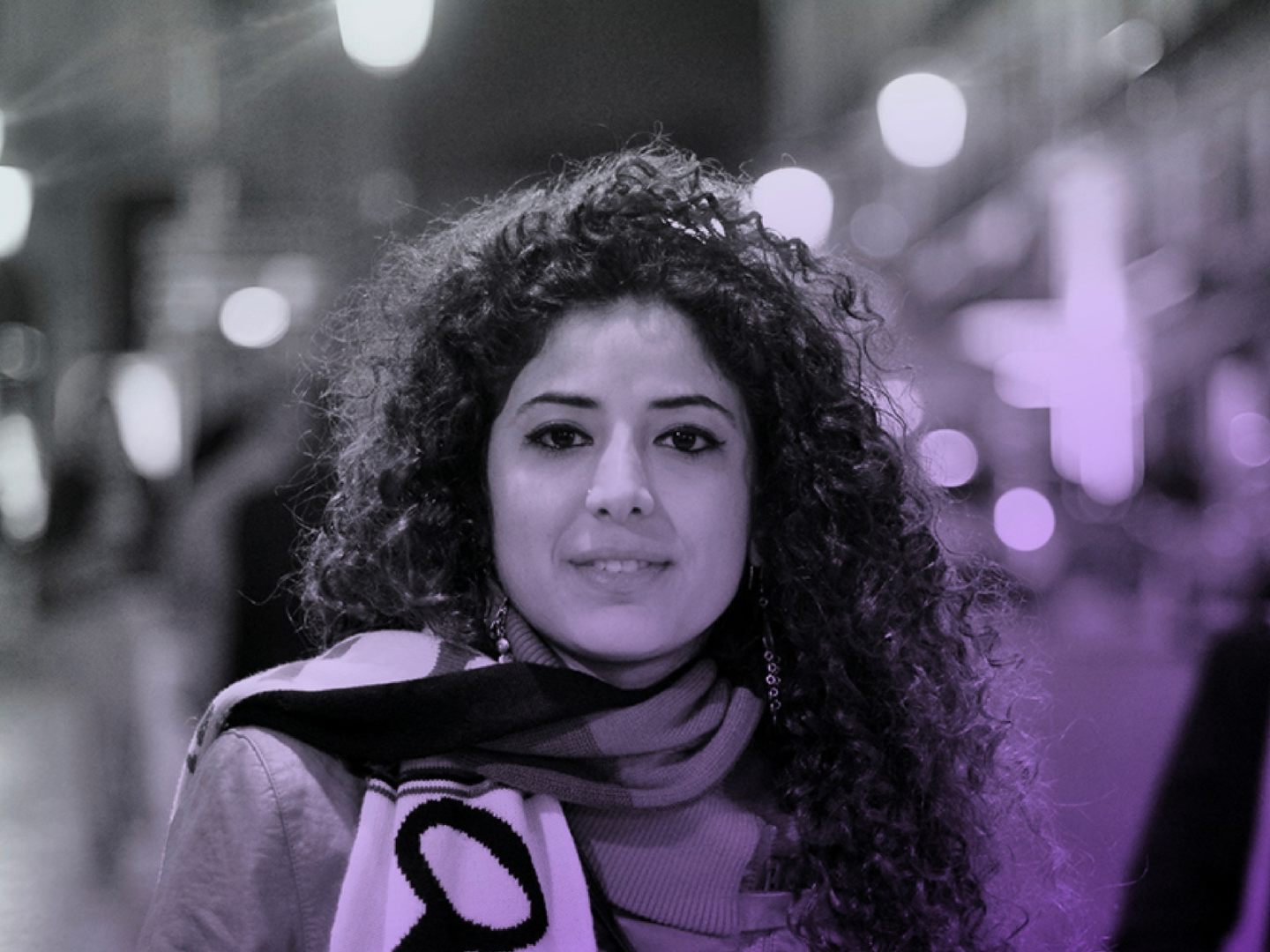
The arrival in life of the poet of these verses, Mohammed El-Kurd, on May 15, 1998, coincides with the commemoration of the Nakba, the Palestinian catastrophe of 1948, the year in which his grandmother Rifqa was expelled from her city of Haifa by the Israeli occupation. When he was eleven years old, Israeli settlers stole part of his family's house in Sheikh Jarrah, in occupied Jerusalem, and moved in. At fourteen, he wrote an open letter about this to then-US President Obama. Later, he and his twin sister Muna became known for their role in the #SaveSheikhJarrah movement, against the ongoing process of expulsion and ethnic cleansing of Palestinians, a fight that Mohammed took to the United Nations. In 2021, the twins were included in Time magazine's list of the 100 most influential people in the world. Mohammed El-Kurd acknowledged that this distinction could be a positive sign, but warned that reducing Palestinian resistance to a single face was mere symbolism and would never be enough to support the cause. Even then, he rejected the role of the perfect victim.
It is not only in the verses quoted above that Mohammed El-Kurd speaks of the perfect Palestinian victims, whose suffering and humanity are only recognized when they behave as the world expects of them. In a recent conversation I had with him at the Porto Book Fair, this Palestinian writer also reminded us that it is possible to look at Palestinian society in all its complexity and still recognize that all Palestinian people deserve to be free, not just those who fit the image of the perfect victim. As in any other place, in Palestine there are good people and bad people. There is child labor, there are those who steal, those who are misogynistic and homophobic. There are those who commit crimes and those who obey the law. All these people, without exception, have the right to liberation.
Mohammed became a journalist early on, an award-winning writer, and an uncompromising poet. He is the author of the poetry collection Rifqa (Antígona, 2024) and the essay Perfect Victims - The Palestinian Condition (Edições 70, 2025), a book that argues that journalists in Palestine are almost poets when narrating all this death and that poets write with knives, leaving a question echoing in our heads: how do we report what should be fiction?
In the introduction to Perfect Victims, Mohammed El-Kurd writes that it is not only grief that makes writing during genocide a tortuous task, but, above all, the awareness that the written word is shamefully insufficient in the face of one-ton bombs. He states that it is difficult to imagine what a poem can do in the barrel of a gun, a phrase that appears twice in the same chapter, as if the repetition itself insisted on the limits of poetry. On the other hand, in the afterword to Rifqa, he says he has learned that poetry is like planting a bomb in a garden.
Perfect Victims changed the way I think about the arguments I use in defense of Palestine, especially here in the West. The book describes the hours we waste trying to prove our humanity: that our men are caring fathers; that "from river to sea" is not a secret call for genocide; that a free Palestine will not lead to a second Holocaust; that there are no tunnels under the hospitals; that even Israeli academics recognize that this is genocide; that anti-Zionism is not anti-Semitism. Mohammed El-Kurd shows that the very lack of logic in propaganda is its greatest strength, because it distracts us from the essential: colonialism, siege, and military occupation. It reminds us that there is no place for side conversations in the face of burning bodies. Nothing can make Palestinian people killable.
In an open letter he wrote to President Obama at the age of fourteen, Mohammed said that if he could make a single wish, it would be to restore to all people the rights that had been stolen from them, from a small ball taken from a boy in the street to a large piece of land stolen from a grandfather. When I asked him if that was still his wish, he responded by explaining his vision of a free Palestine: redistributing resources and wealth, returning the land to its rightful owner; freeing all Palestinian political prisoners; and ensuring the return of all Palestinian refugees to their homeland.
The conversation ended with jasmine, the flower that climbs throughout the book Rifqa, only to return in Perfect Victims: "there has always been struggle, there has always been jasmine," because "seeds don't need permission for a truce to germinate."
My own book of poetry is titled Jasmine Rain, and perhaps that's why the question that runs through one of its poems resonates with me: "How far are we from Jerusalem... how far are we from the jasmine?" Knowing that the conversation I had with Mohammed El-kurd certainly wouldn't stop the genocide and ethnic cleansing that are intensifying throughout Palestine, from the river to the sea, perhaps it allowed us to dream of a free Palestine. As he says: if seeds can germinate in hell, so can revolution.