
In the classroom, boys and girls discussed toxic masculinity and street harassment. Faced with the same stories, some boys identified exaggerations, while the girls recognized situations that were part of reality. The story is recounted by Nicoletta Mandolini, a researcher at the Centre for Communication and Society Studies (CECS) at the University of Minho, who adds that "one of these conversations was long, about two hours, which says a lot about their willingness to talk about these issues."
These and other conversations stemmed from graphic novels, the basis of Genteel — Graphic Novels Against Gender Violence , of which Nicoletta is the principal investigator.
When the project started, the goal was to bring a set of graphic novels in Portuguese to three schools in northern Portugal – Braga, Porto, and Vila Verde, information that is still on the project's website – as a way to spark discussions about gender violence among students. But “when the school in Braga saw the graphic novels, they communicated that they had to abandon the project,” Nicoletta describes to Gerador.
Between the start of the project and the school visits, Sex Education was also removed from the Essential Learnings of the Citizenship subject, and initially, Nicoletta thought the project would be a way to provide some students with contact with the subject, albeit through another channel. But she received a resounding no from a teacher: “I was told, for example, that this is not the language that is taught, the Portuguese that is taught in Portugal, I was told that the 16-year-old students are children, in a clear process of infantilizing people who are already young adults, and that they are pornographic graphic novels.” Then, there was fear of the parents' reaction. Faced with this refusal, the team contacted a school in the Barcelos area, which, after an initial acceptance, ended up declining to participate in the study, not only because the available time was more limited, but also for the reason given in Braga: "the fear of the reactions that these approaches and the issues of gender and sexuality can cause in students and, above all, in the students' parents," describes the researcher.
The project would thus move forward with 20 students (10 boys and 10 girls) from a secondary school in Porto and another in Vila Verde. Having mapped out novels with potential interest, the research team, composed of Nicoletta Mandolini and Cristina Álvares, Ece Canli and Alice Balbé, from the University of Minho, as well as Daniel Cardoso, from the Lusófona University of Lisbon, selected five works to be read by the students. The team conducted individual interviews with the students to collect data on their reactions and the awareness stimulated by the works, followed by group discussions.
Beyond harassment and toxic masculinity, the Voluntary Interruption of Pregnancy (VIP) was also debated, although the pretext was not obvious: the graphic novel "Juízo" presents the topic as if it were the extraction of a wisdom tooth. "There aren't many differences, except that one is extremely stigmatized and the other is not. For one, you can die, for the other, most likely not," compares the researcher. Many students did not grasp the underlying theme, which was later explained during individual interviews. In group discussions, the subject was discussed, although perspectives did not diverge substantially. Boys and girls showed themselves to be aligned in raising ethical problems surrounding VIP, something that Nicoletta Mandolini attributes to the degree of stigmatization surrounding the subject, which is felt especially in women, who are more "indoctrinated" about their role in society and about the symbolism of pregnancy. Nevertheless, the researcher emphasizes that this was a discussion among a small number of students, so it is not possible to draw generalized conclusions about the young people's stance on this issue.
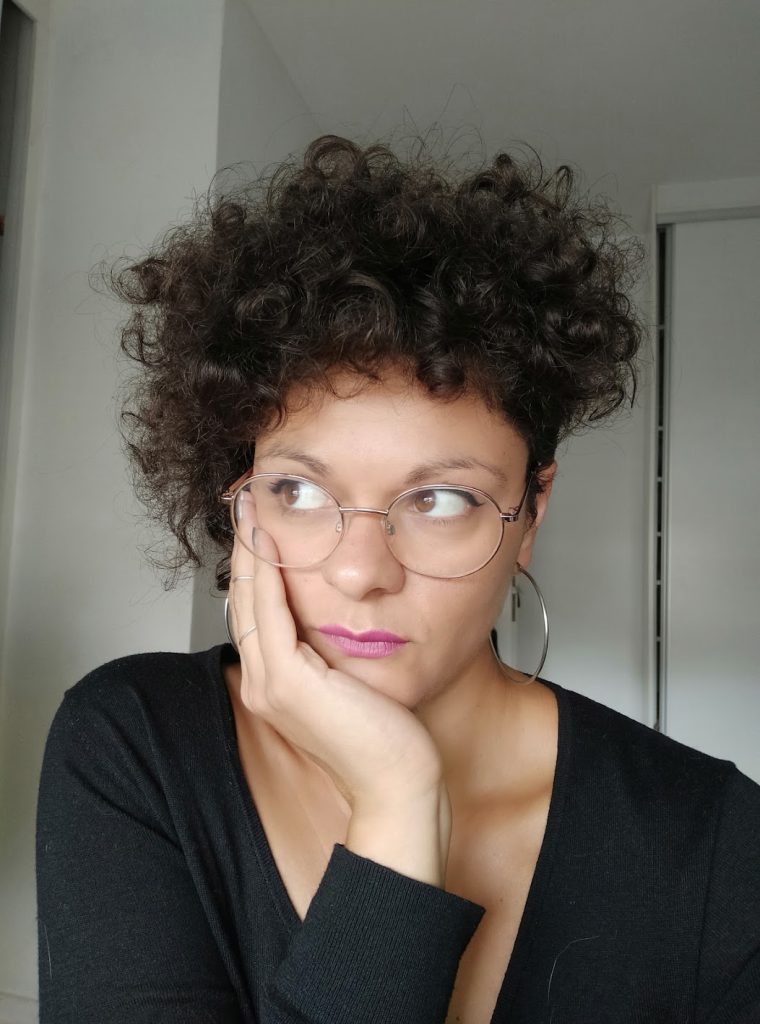
Nicoletta Mandolini. Photograph provided by herself.
The challenging approach of the graphic novel
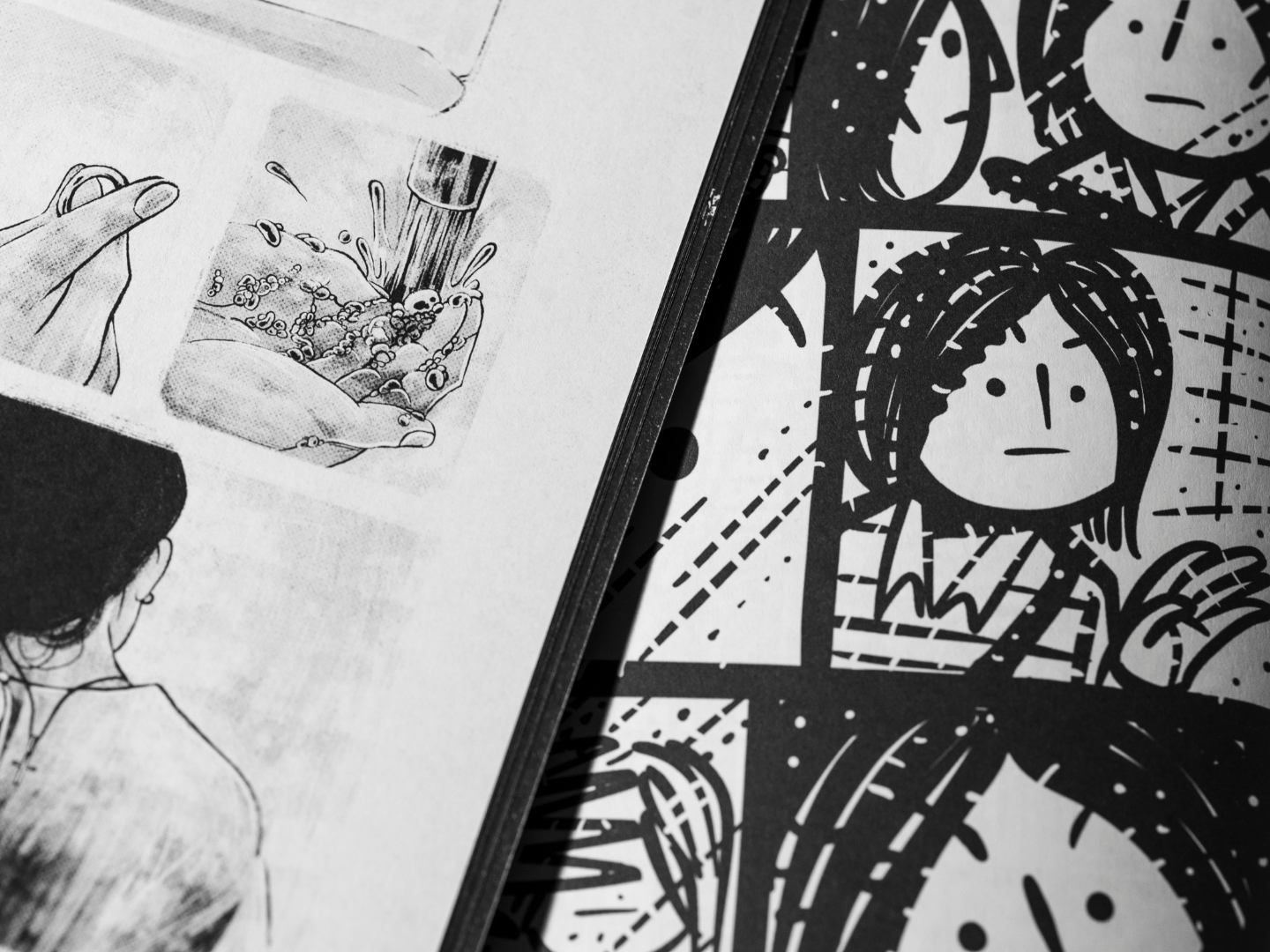
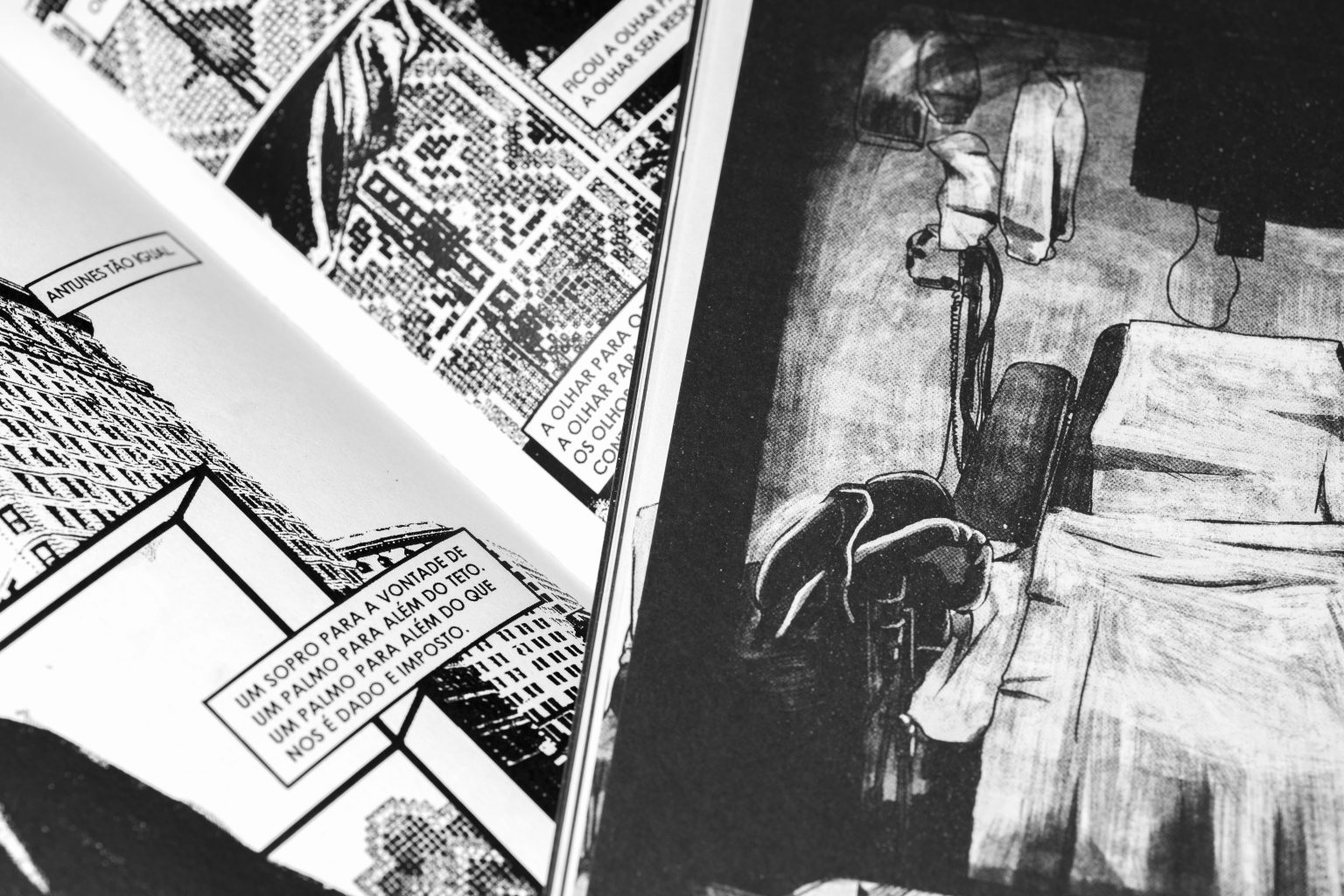
Comics and graphic novels were not always the subject of study for Nicoletta Mandolini, but gender violence and other forms of gender discrimination are the main topics that the researcher in Cultural and Media Studies has focused on. In 2019, the Italian author earned her doctorate from University College Cork, Ireland, with the thesis "Femicide Narratives: The Italian Narrative Discourse on Lethal Gender Violence between Journalism and Literature ." The aim was to understand how Italian literature and journalism challenged, or at least represented, the issue of femicide. Although she worked with literary and journalistic texts, her research led her to encounter two graphic novels on the subject. At the time, they remained shelved, but her postdoctoral studies provided an opportunity to revisit them. She realized that, in a country where the topic of femicide is very present in media discourse – something she explores in her thesis – there weren't just two graphic novels on the subject, but many more. And this brings new perspectives, because while in illustrated books, word and image describe each other, in this type of work that can happen, but there can also be a contradiction. "I find this very interesting when it comes to..." "The representation of gender-based violence," says the researcher, regarding the potential to deconstruct typically rigid simplifications in the representation of women solely as victims.
Photography courtesy of Nicoletta Mandolini
In fact, the problem is complex and structural, with quantifiable costs. In Portugal alone, it is estimated that gender-based violence represents a cost to the State of 8,4 million euros, according to a 2021 study by the European Institute for Gender Equality. These costs, which amount to more than 366 million euros across the 27 countries of the European Union, are related to health, legal and specialized support services expenses.
On the other hand, the increased consumption of graphic novels and comic books creates additional opportunities to address the issue through this channel. As Nicoletta Mandolini and Cristina Álvares note in the article " Resilient Comics — Graphic Novels Against Gender Violence in the Lusophone World: A Mapping ," published this year in the Lusophone Journal of Cultural Studies, Portugal showed a 73% increase in sales in 2021.
The selection of works for the study took into account two main criteria: conformity with the adopted definition of graphic novel and the relevance of gender violence in the narrative. Here, it is important to distinguish between comic books and graphic novels. As Nicoletta explained to Gerador, some consider the graphic novel merely a market-driven publishing format, while others consider it a distinct medium from comic books. The team opted for a comprehensive definition, but made a distinction between the multi-volume production associated with comic books and the more conclusive nature of the graphic novel (even though it may have more than one volume), necessary for a project with a total duration of 18 months. Another distinction is the more evident authorial character of the graphic novel, in contrast to comic books, where authorship is associated with a team.
Furthermore, the Portuguese-speaking context was important due to linguistic proximity, and the significant production of this type of work in Brazil was reflected in the final selection, with four novels from Brazil and one from Portugal (Manda Mensagem Quando Chegares, by RGB). The limited time available did not allow for a broader geographical exploration, and the PALOP countries were left out.
Despite focusing on Lusophony, Nicoletta Mandolini makes a point of highlighting a critical view of the term, which extends to her research center, where the concept is not seen in isolation from the colonial legacy that permeates it. It is not, therefore, a matter of viewing it as an uncritical linguistic and cultural unit, but of understanding the space for conflict that is implicit within it.
During the project's final event, which took place in July at the University of Minho, the "Graphic Handbook" by Marco D'Alessandro and Antonio Mirizzi was launched. This handbook compiles best practices for using graphic novels to raise awareness about gender-based violence. The resource, in comic book format, is still under development (although a preliminary version is already available on the project website) and will contain guidelines for implementing the introduction of graphic novels about gender-based violence in Portuguese schools.